466 mnemonics · 485 ASL units
Scalar
Begin with the scalar instruction surface and its architectural operands, control flow, memory access, arithmetic, and system forms.
AGU · ALU · AMO · BRU · FSU · SYSPTO ISA / FORMAL SPECIFICATION
One released architecture, read in order through Scalar, Block, and direct Tile instruction surfaces.
Start with the whole
PTO defines one architecture-visible contract. Its released source tree separates shared architecture state and rules from the Scalar, Block, and Tile instruction surfaces that use them.
Read the architecture owner first. Use the three surface chapters below as navigation, then open each unit's embedded source and evidence when implementation detail is needed.
Read the architecture workbench →Read the instruction surfaces
466 mnemonics · 485 ASL units
Begin with the scalar instruction surface and its architectural operands, control flow, memory access, arithmetic, and system forms.
AGU · ALU · AMO · BRU · FSU · SYS61 mnemonics · 120 ASL units
Continue with the explicit Block and command surface: lifecycle, execution descriptors, operands, attributes, and control state.
Lifecycle · Execution · Attributes · Operands · Encoding107 mnemonics · 173 ASL units
Then read the direct Tile operation surface, organized by computation, reduction, layout, matrix, and data-movement families.
Elementwise · Reduce/expand · Layout · Matrix · Memory/data movementThen inspect the records
ADRs preserve reviewed decisions, rationale, status, and affected owners. They are history—not a replacement for current ASL/NDF meaning.
Read the ADR process →NDF identities are embedded in their owning ASL sources. The explorer connects clauses to owners, tests, and ADR history without inventing new semantics.
Explore NDF relationships →Trace the current contract
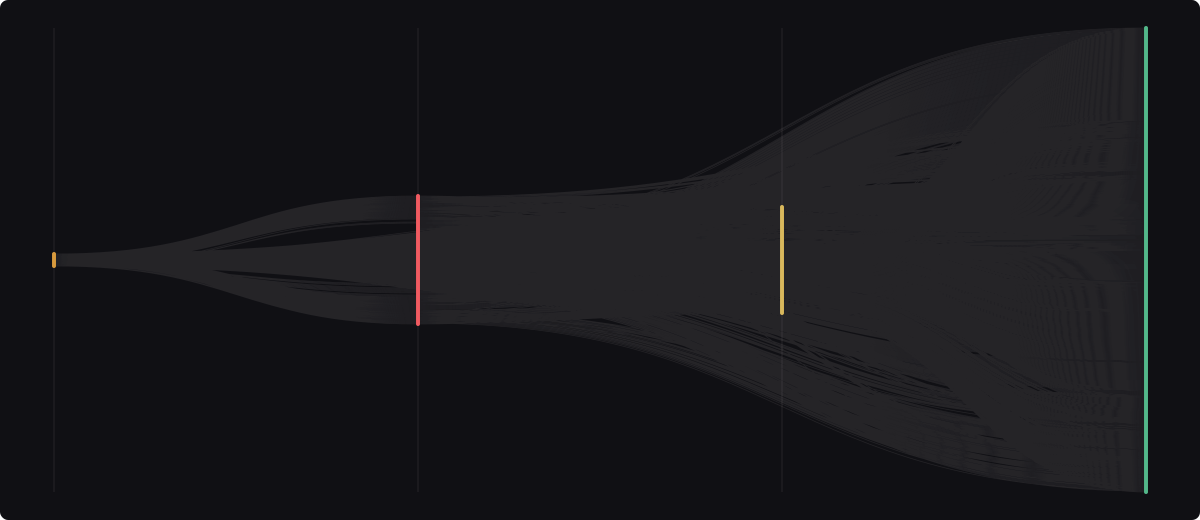
This complete build-generated overview connects ADR history, current NDF clauses, owning ASL units, and executable AVS evidence. Open the explorer to inspect exact identities and sources.
Move from reading to implementation
Search after choosing the architectural context, or jump directly to a stable released identity.
Try ADD, BSTART.TEPL, TLOAD, an NDF identity, or an exact source path.